Introduction
When confronted with a medical emergency, understanding exactly how to react can be the difference in between life and death. This is where understanding first aid procedures such as DRSABCD enters play. Established by Australian first aid organizations, DRSABCD offers an organized technique to evaluating and handling emergencies effectively.
In this comprehensive overview, we will explore each element of the DRSABCD procedure thoroughly, discuss its importance in first aid programs, and offer you with vital understandings on just how to use it in real-life scenarios. From CPR strategies to mental wellness first aid, our objective is to equip you with the understanding needed for reliable intervention.

What is DRSABCD?
DRSABCD represent Risk, Action, Send for aid, Air passage, Breathing, Circulation, and Defibrillation. Each step is essential in identifying the appropriate response throughout an emergency situation.
- Danger: Always evaluate the scene for prospective threats before intervening. Response: Examine if the person is receptive by delicately drinking them and talking loudly. Send for aid: If the individual is less competent or requires instant aid, telephone call emergency services. Airway: Make sure that the airway is clear to assist in typical breathing. Breathing: Analyze whether the person is taking a breath normally. Circulation: Look for indications of blood circulation like movement or pulse; if absent, begin CPR. Defibrillation: If available, utilize an Automated External Defibrillator (AED) as soon as possible.
Understanding DRSABCD: Your Lifesaving First Aid Method will not only improve your knowledge yet also encourage you to act confidently in emergencies.
Why Learn First Aid?
Importance of First Aid Training
First aid training is crucial due to the fact that it prepares people to manage emergency situations properly. Whether it's a small injury or a life-threatening scenario such as cardiac arrest requiring CPR (cardiopulmonary resuscitation), having educated personnel can save lives.
Benefits of Taking a First Aid Course
Increased Confidence: Knowing exactly how to react appropriately reduces panic during emergencies. Skill Advancement: Hands-on training instructs practical skills that can be used immediately. Certification Opportunities: Finishing an identified training course often causes accreditation which enhances employability in several sectors.Types of First Aid Surges Available
There are various kinds of first aid training courses tailored to certain requirements:
- Standard First Aid CPR Training Mental Health First Aid Childcare First Aid Workplace Safety Courses (like Manual Handling)
Understanding Each Step of DRSABCD
1. Danger: Analyzing the Scene
Before hurrying right into any scenario, ensure your safety which of others around you. Watch out for:
- Traffic hazards Fire or smoke Electrical dangers Aggressive individuals
Tips for Making sure Safety and security:
- Use care when coming close to an occurrence scene. Wear individual safety devices if available.
2. Feedback: Checking Consciousness
To establish if an individual needs help:
Gently tremble their shoulders while noisally asking if they are okay. Observe their facial expressions and movements.What If They Are Unresponsive?
If they reveal no feedback:

- Call emergency situation solutions immediately.
3. Send out for Assistance: Calling Emergency Situation Services
When calling for help:
Dial your regional emergency number (e.g., 000 in Australia). Provide clear details concerning your area and the nature of the emergency.Key Details to Connect:
|Information Needed|Example|| -----------------------|--------------------------------|| Location|"Corner of King St and Key St"|| Nature of Emergency situation|"An individual has actually fallen down"|| Number of Individuals Involved|"One unresponsive adult"|
4. Airway: Ensuring Respiratory Tract Is Clear
After evaluating responsiveness:
Carefully tilt their head back and raise their chin to open up the airway. Remove any kind of visible blockages like food or vomit.Remember:
Always inspect the individual's mouth after opening up the respiratory tract however do not perform blind finger sweeps unless you see something plainly lodged.
5. Breathing: Monitoring For Signs Of Life
Once you have actually safeguarded an open respiratory tract:
Look for chest increase and fall. Listen carefully for breath sounds or really feel for breath on your cheek.What If They Are Not Breathing?
If breathing has stopped or shows up unusual:
Begin CPR immediately!6. Circulation: Performing CPR
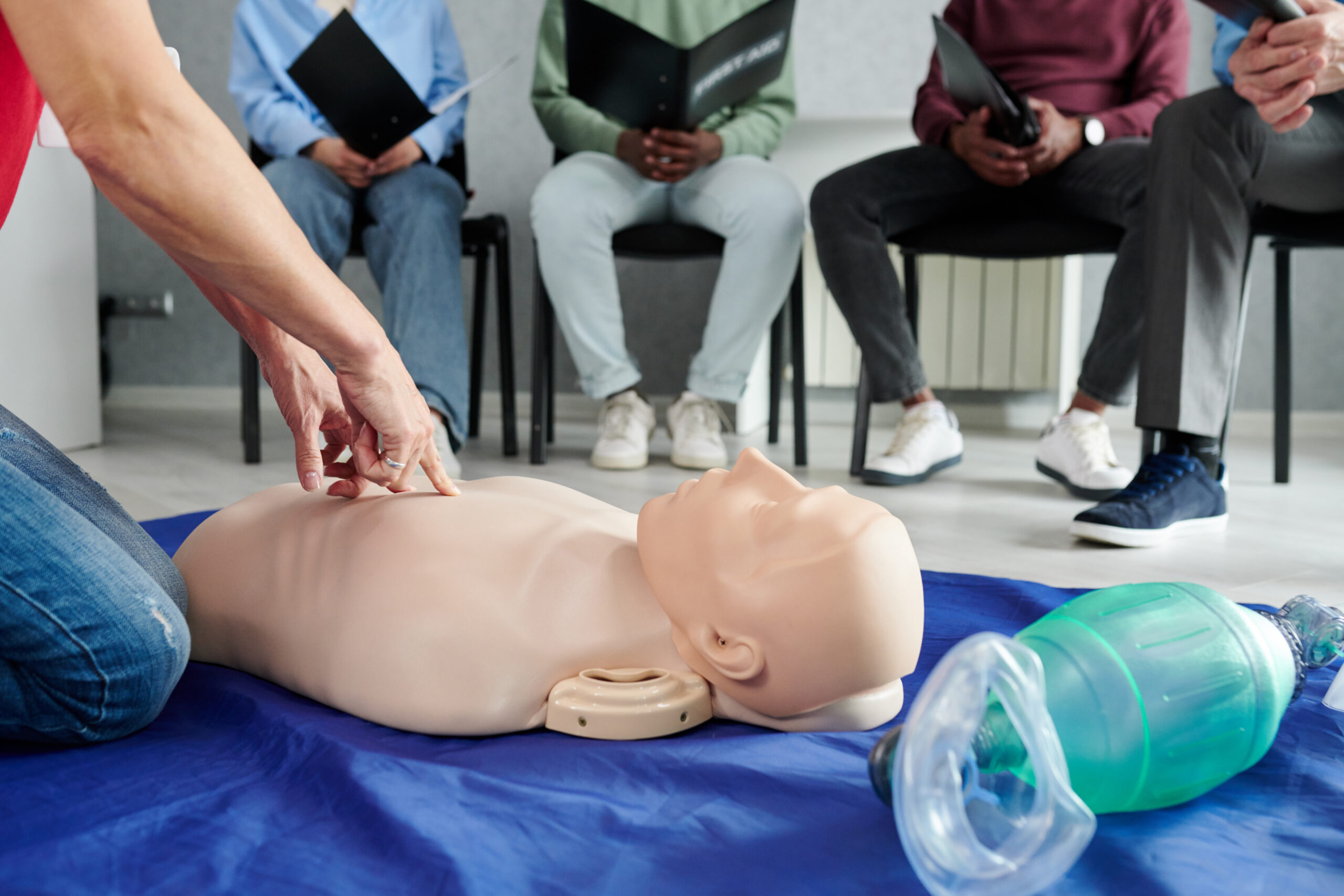
Cardiopulmonary Resuscitation (CPR) includes 2 key components:
Chest Compressions Rescue Breaths (if trained)Follow these steps:
Chest Compressions
Place heel of one hand on center of upper body; location other hand on top. Press down set at a rate of 100-- 120 compressions per minute.Rescue Breaths
Only carry out rescue breaths if educated:
After every 30 compressions, provide 2 rescue breaths. Each breath must last about one second-- watch for upper body rise.7. Defibrillation: Using an AED
Automated Outside Defibrillators (AEDs) are vital during heart attacks:
Turn on the AED and adhere to voice prompts. Attach pads as indicated-- one above best nipple and one listed below left armpit.Important Notes About AEDs
AEDs are made for laymans; they evaluate heart rhythm instantly and only recommend shock when necessary.
Mental Wellness First Aid: An Essential Component
While physical injuries control discussions around first aid programs, mental health and wellness emergencies call for equivalent attention.
Understanding Mental Wellness Emergencies
Mental health and wellness dilemmas can manifest as anxiousness assaults, suicidal ideas, or severe state of mind problems affecting actions dramatically.
How Can You Help?
Providing psychological health and wellness first aid involves:
Listening nonjudgmentally Encouraging professional help Offering reassurance but avoiding clichés like "simply comfort."Common Situations Where DRSABCD Applies
Understanding just how DRSABCD applies throughout various circumstances can strengthen its relevance in real-life situations.
Scenario 1: Heart Arrest
This circumstance exemplifies why knowing DRSABCD is important-- responding rapidly can considerably raise survival rates with prompt application of CPR and defibrillation utilizing an Subiaco first aid training AED.
Scenario 2: Choking Incidents
In instances where someone shows up incapable to take a breath because of choking:
Apply back blows complied with by stomach thrusts while following steps detailed under DRSABCD until assistance gets here or blockage clears.
FAQs Regarding DRSABCD Protocol
Q1: The length of time does a first aid certificate last?
A: Usually lasts 3 years prior to requiring renewal through refresher courses such as HLTAID011 Give First Aid training courses offered nationwide including options near me like 'first aid program sydney' etc, depending on place preferences!
Q2: Can anybody take a first aid course?
A: Definitely! Training courses are readily available from novice degrees up via progressed training matched even in the direction of specialized areas like childcare first-aid classes!
Q3: What does CPR stand for?
A: Cardiopulmonary Resuscitation-- a lifesaving treatment executed when someone's heartbeat stops!
Q4: Is psychological wellness first aid covered under conventional training?
A: While frequently different topics within more comprehensive programs; lots of credible companies currently include some elements relevant obtaining first aid certification especially towards supporting individuals experiencing mental health and wellness concerns together with physical feedbacks showed throughout basic lessons!
Q5: Just how do I discover a first aid training course near me?
A: Simply search online using terms like "first aid course near me" together with specific places such as "first aid program brisbane" yielding numerous alternatives customized towards geographical needs/preferences listed across a number of platforms promoting education possibilities locally available!
Q6: What's consisted of in fundamental life support?
A: Fundamental Life Assistance usually encompasses procedures ranging from evaluation checks outlined previously under DRSABCD through practical applications entailing compression strategies based upon guidelines established by organizations like Red Cross/other certified organizations supplying qualifications appropriate throughout multiple settings including workplaces/schools/community events etc, reinforcing expertise retention even more enhancing overall readiness levels within neighborhoods therefore improving public safety and security standards!
Conclusion
Understanding DRSABCD isn't almost memorizing actions; it has to do with Hop over to this website growing a mindset geared towards readiness that can eventually save lives! By committing time toward learning these principles with approved sources offering detailed courses-- whether on the internet formats/even hands-on trainings used regularly within different neighborhoods-- you empower on your own not only with valuable abilities however additionally add positively in the direction of constructing safer atmospheres any place they might be needed most! So why wait? Enroll today!
By integrating both traditional physical responses alongside arising trends surrounding psychological wellness into academic structures surrounding public safety and security efforts-- we cultivate higher strength amongst populaces while nurturing healthier societies altogether!